

Most homeowners who ask us about pricing want one simple number. We understand why, but the honest answer is that a standard security system has two separate costs: what you pay once to get the system installed, and what you pay each month to keep it monitored. Looking at them together is the only way to compare alarm packages fairly. A low monthly rate can hide a large installation charge, and a low installation charge can come with a long contract. For our standard system, monitoring starts at $19.99 per month with no contract, plus a $299 prewire/new install.
In this guide, we explain how both costs work for a standard system, what shapes your final quote, and which questions to ask before you agree to anything. If you want a broader look at everything we offer, our security systems overview covers each package. This article stays focused on the standard tier and does not cover smart home or camera pricing.
What We Mean by a Standard Security System
When we say standard security system, we mean a traditional, professionally installed alarm built around a control panel, a keypad, and sensors on the doors and windows you want protected. It is the core of what most homeowners picture when they think about an alarm.
Our standard package is built around a few main components:
1. A DSC 5501 RF keypad, which is where you arm and disarm the system
2. A 616 motherboard, which is the control panel that connects every sensor and communicates with the monitoring center
3. Door and window sensors that detect when an entry point is opened
4. Monitoring, which is the service that receives alerts and responds when something is triggered
This tier is different from our smart home package, which adds app control and automation, and different from our camera packages. It is also different from our existing security system service, which is for homeowners who already have equipment in place. Each of those has its own pricing structure, so we keep them separate here to keep the numbers clear.
The Two Types of Cost: Upfront and Monthly
Think of a standard alarm system like a utility connection. There is a setup cost to get started, and then an ongoing cost to keep the service running.
1. Upfront cost: Covers equipment, wiring, installation, and setup. You pay it once, at installation.
2. Monthly cost: Covers 24/7 alarm monitoring and communication with the monitoring center. You pay it every month for as long as you want the system monitored.
Keeping these two categories apart makes any quote easier to read, whether it comes from us or another company.
What the Upfront Cost Includes
The upfront cost of a standard home security system covers the physical work required to protect your home. Our professional home security installation services include prewiring or new installation, depending on your property’s needs. Understanding what this charge includes can help you make an informed decision about your home security investment.
1. Your upfront cost generally reflects:
2. The control panel and keypad that run the system
3. The door and window sensors placed at your entry points
4. Labor for a technician to install and test each device
5. Prewiring, which means running wiring through the structure so devices connect reliably
6. Programming the system and setting up your monitoring account
Prewiring is worth a closer look. A wired installation can be neater and more dependable over many years, but it takes more labor than a system that relies only on wireless devices. In a newer home that is still under construction or a house with accessible walls and attic space, the work often goes faster. In an older home with finished walls, a technician may need more time to route wiring, which can change the labor portion of your quote.
Some cities also require alarm permits or registration. Before you install, it is smart to check what the City of Austin or your local jurisdiction requires, since those fees and rules can change over time. We are glad to walk you through what applies to your address.
What the Monthly Cost Covers
The monthly portion of your standard security system pays for monitoring. Without monitoring, an alarm only makes noise at your house. With it, a trained operator receives the signal, tries to confirm whether it is a real emergency, and contacts the appropriate responders.
Our 24/7 alarm monitoring works around the clock, every day of the year, including nights, weekends, and holidays. Your monthly rate generally pays for:
1. Continuous monitoring of your system
2. The communication path between your panel and the monitoring center
3. Operator response when an alarm is triggered
4. Ongoing account support
The communication path matters more than many people expect. A system can reach the monitoring center through your home broadband connection or through a cellular connection. Broadband monitoring is usually the lower-cost option, but it depends on your internet staying connected. Cellular monitoring does not depend on your home internet, which makes it more resilient during an outage, though it may come with a different monthly rate. When you compare alarm monitoring price quotes, always confirm which communication method the number assumes.
What No Contract Means for Your Costs
A no-contract alarm system cost works differently from a traditional alarm agreement. Many alarm companies ask homeowners to commit to a multi-year term. If you move or want to switch providers before the term ends, you may owe early termination fees.
With no contract monitoring, you are not locked in. You pay month to month, and you can end service without a penalty tied to a minimum term. For many homeowners in Austin, where moving for work or school is common, that flexibility has real value.
It helps to understand the tradeoff clearly. When a company does not require a contract, the upfront installation cost is usually stated openly because it is not being spread across a long agreement. When a company offers very low or free equipment, that cost is often recovered through the contract length or a higher monthly rate. Neither approach is wrong, but they work differently. The right question is not which number is lower today, but what you will have paid after one year, three years, and five years.
Before choosing an alarm package, check this Consumer Reports guide to home security systems to compare equipment, monitoring, and contract options.
Factors That Change Your Standard Alarm System Cost
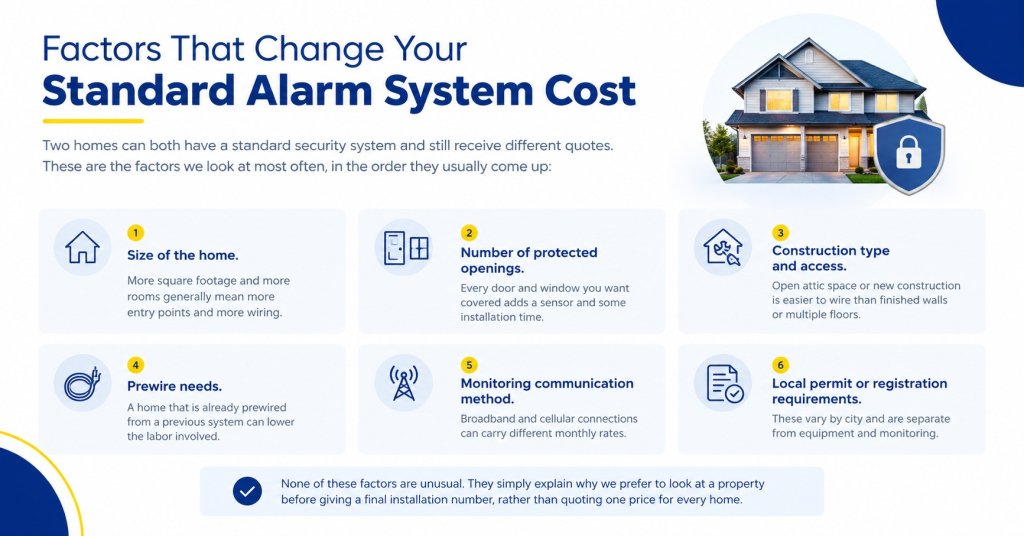
Two homes can both have a standard security system and still receive different quotes. These are the factors we look at most often, in the order they usually come up:
1. Size of the home. More square footage and more rooms generally mean more entry points and more wiring.
2. Number of protected openings. Every door and window you want covered adds a sensor and some installation time.
3. Construction type and access. Open attic space or new construction is easier to wire than finished walls or multiple floors.
4. Prewire needs. A home that is already prewired from a previous system can lower the labor involved.
5. Monitoring communication method. Broadband and cellular connections can carry different monthly rates.
6. Local permit or registration requirements. These vary by city and are separate from equipment and monitoring.
None of these factors is unusual. They simply explain why we prefer to look at a property before giving a final installation number, rather than quoting one price for every home.
A Checklist to Use When You Compare Alarm Quotes
Whether you are speaking with us or with another provider, a clear checklist makes quotes easier to compare. Ask each company the following:
What is the full upfront cost, and what exactly does it include?
1. What is the monthly monitoring rate, and which communication method does it assume?
2. Is there a contract, and if so, how long is the term?
3. What are the early termination terms if I move or cancel?
4. Who owns the equipment after installation?
5. Are there separate fees for permits, activation, or service calls?
6. What is the process if a sensor or the panel needs repair?
7. Write the answers side by side. A quote that looks lower on one line often looks different once every line is filled in.
If you already have an alarm panel and sensors in your home, you may not need a full new installation at all. In that case, our existing security system service lets us connect your current equipment to monitoring, which has a different cost structure than a new standard install.
How to Compare Total Cost Over Time
Because upfront and monthly costs behave differently, a simple method gives you a more accurate comparison than looking at either number alone. Here is the process we suggest:
1. Write down the upfront installation cost from each quote.
2. Multiply the monthly monitoring rate by the number of months you expect to keep the system. Three years is a useful starting point.
3. Add any fees for permits, activation, or equipment that are charged separately.
4. Add the totals together for each provider.
5. Compare the final numbers, then weigh them against contract terms and flexibility.
This approach keeps a low introductory offer from distorting the picture. It also shows you how much of your cost comes from installation and how much comes from monitoring, which helps you decide where flexibility matters most to you.
Costs That Are Easy to Overlook
Most surprises come from items that were never discussed at the start, not from the main prices. A few to keep in mind:
1. Equipment you may want to add later, such as extra sensors or a second keypad
2. Service visits if something needs adjusting after installation
3. Changes to your internet service that affect broadband monitoring
4. Moving the system to a new home, which may require reinstallation
None of these are meant to alarm anyone. They simply belong in a complete cost picture, and we would rather you hear about them from us before installation than discover them afterward.
How We Approach a Quote in Austin
We keep our quoting process simple. We start by talking with you about your home, your entry points, and what you want the system to do. We then explain which parts of the cost are upfront and which are monthly, so there are no unclear line items. If you decide the standard system is not the right fit, we will say so and point you toward the package that suits your needs better.
We have served Austin and the surrounding communities for many years, and you can see the areas we serve to confirm we cover your neighborhood. Because homes differ so much, we encourage a short conversation before settling on any figure.
Talk With Us About Your Standard Security System
If you are comparing alarm packages and want a clear breakdown for your own home, we are happy to go through it with you. Reach out to our team, and we will explain the upfront cost, the monthly monitoring rate, and the contract terms for a standard security system, with no obligation to move forward.
